
Boom Pump vs. Line Pump: Which Concrete Pumping Services Method Is Right for Your Lafayette Project?
Choosing the right pump type is one of the most practical decisions you will face when planning a concrete pour. This guide explains the key differences between boom pumps and line pumps so Lafayette, LA, contractors and property owners can make a confident choice.
Concrete pumping services move mixed concrete from a ready-mix truck through a pipeline directly to the placement area. Both pump types accomplish that goal, but in very different ways. The right method depends on site access, pour height, volume, and job type.
What Is a Boom Pump and When Should You Use One?
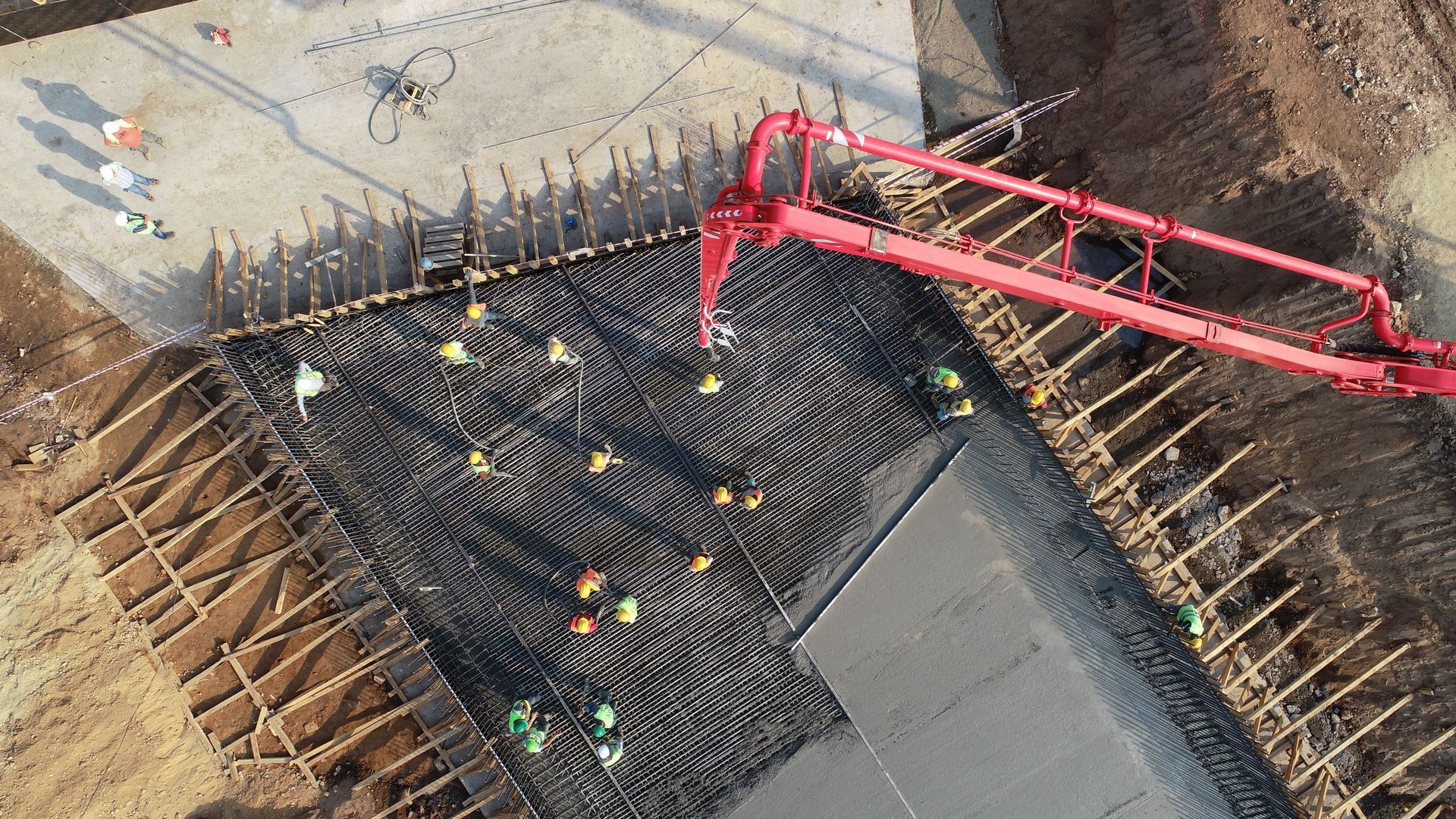
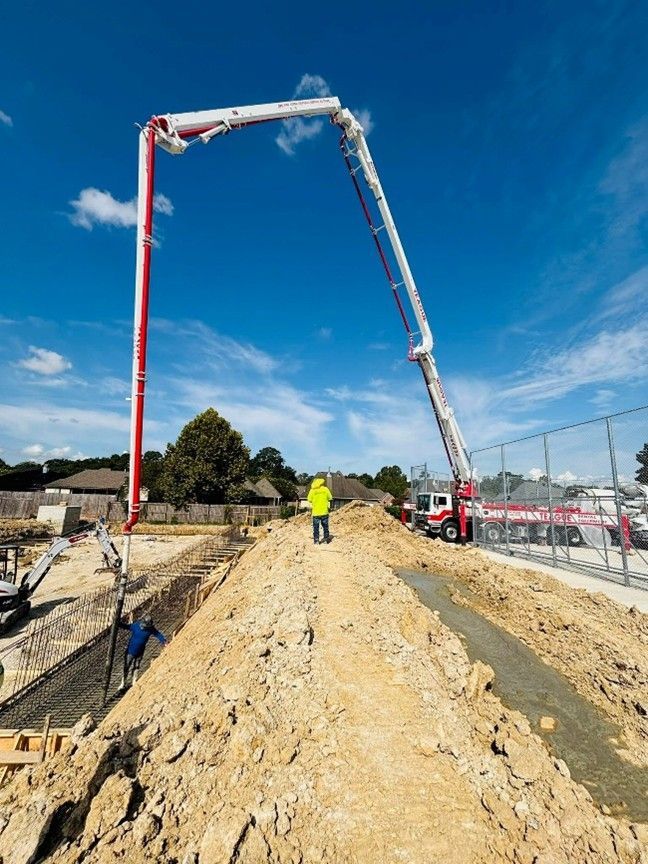
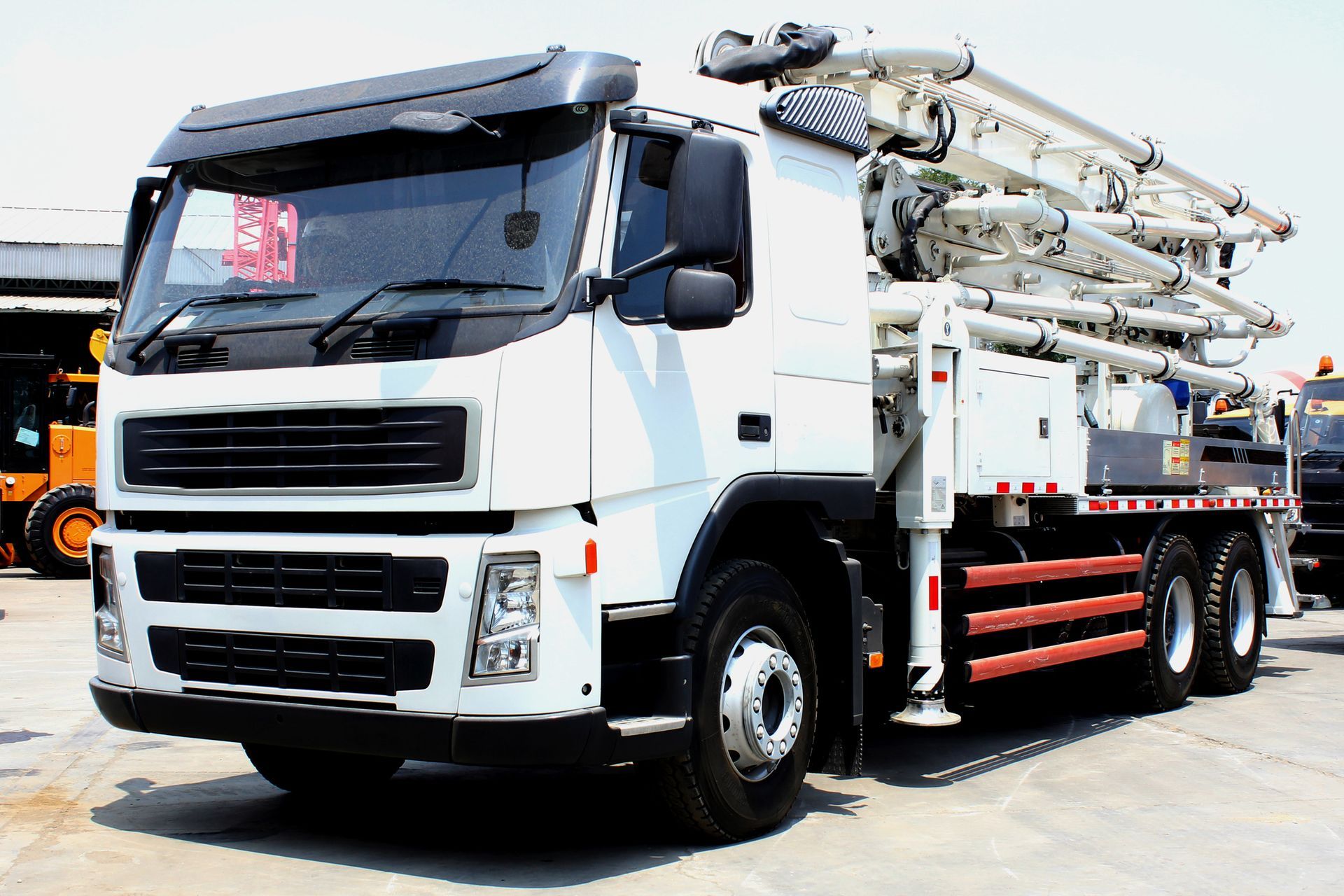
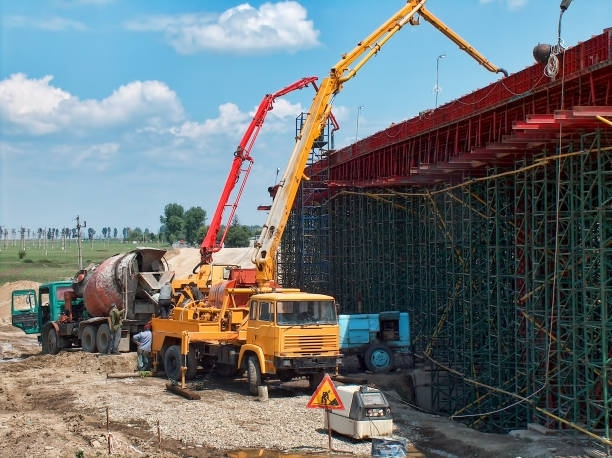
A boom pump is mounted on a truck and uses a remote-controlled, articulating arm to extend concrete hose across a wide area. The arm can fold, angle, and maneuver around obstacles without repositioning the truck, making it the right choice for long reach, significant height, or large pour volumes.
Boom pumps are well suited for large commercial slabs and parking structures, multi-story buildings and elevated decks, high-volume residential foundations, and projects where ground conditions make close vehicle access difficult.
In the Lafayette area, boom pumps appear on large commercial builds along Ambassador Caffery Parkway, hotel and mixed-use developments in the Acadiana region, and institutional projects such as hospitals and schools. South Louisiana terrain can include soft, saturated ground near bayous where getting equipment close to a pour is not always practical. A boom pump's extended reach addresses that challenge without requiring trucks to move onto unstable ground.
What Is a Line Pump and When Does It Make More Sense?
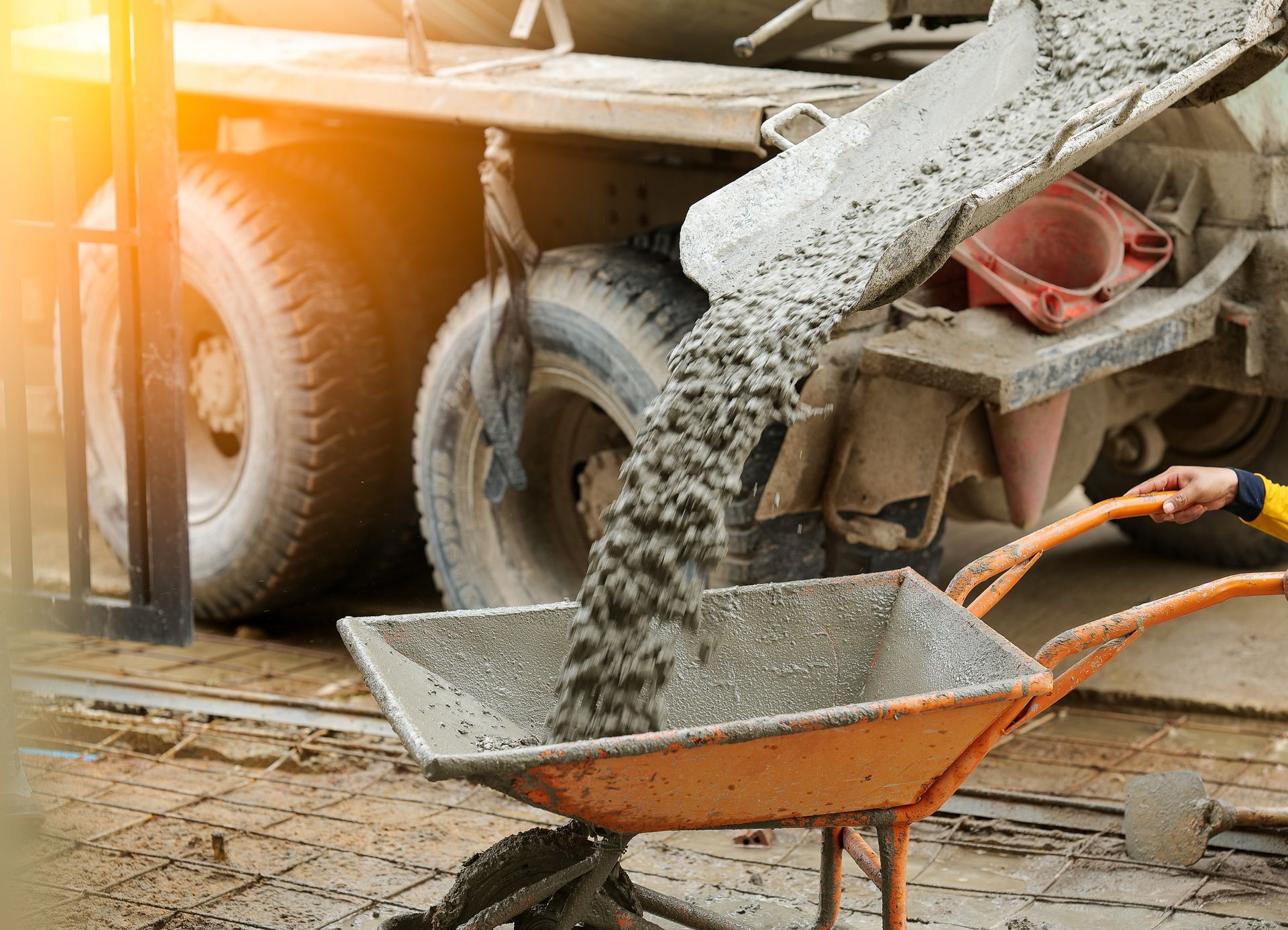
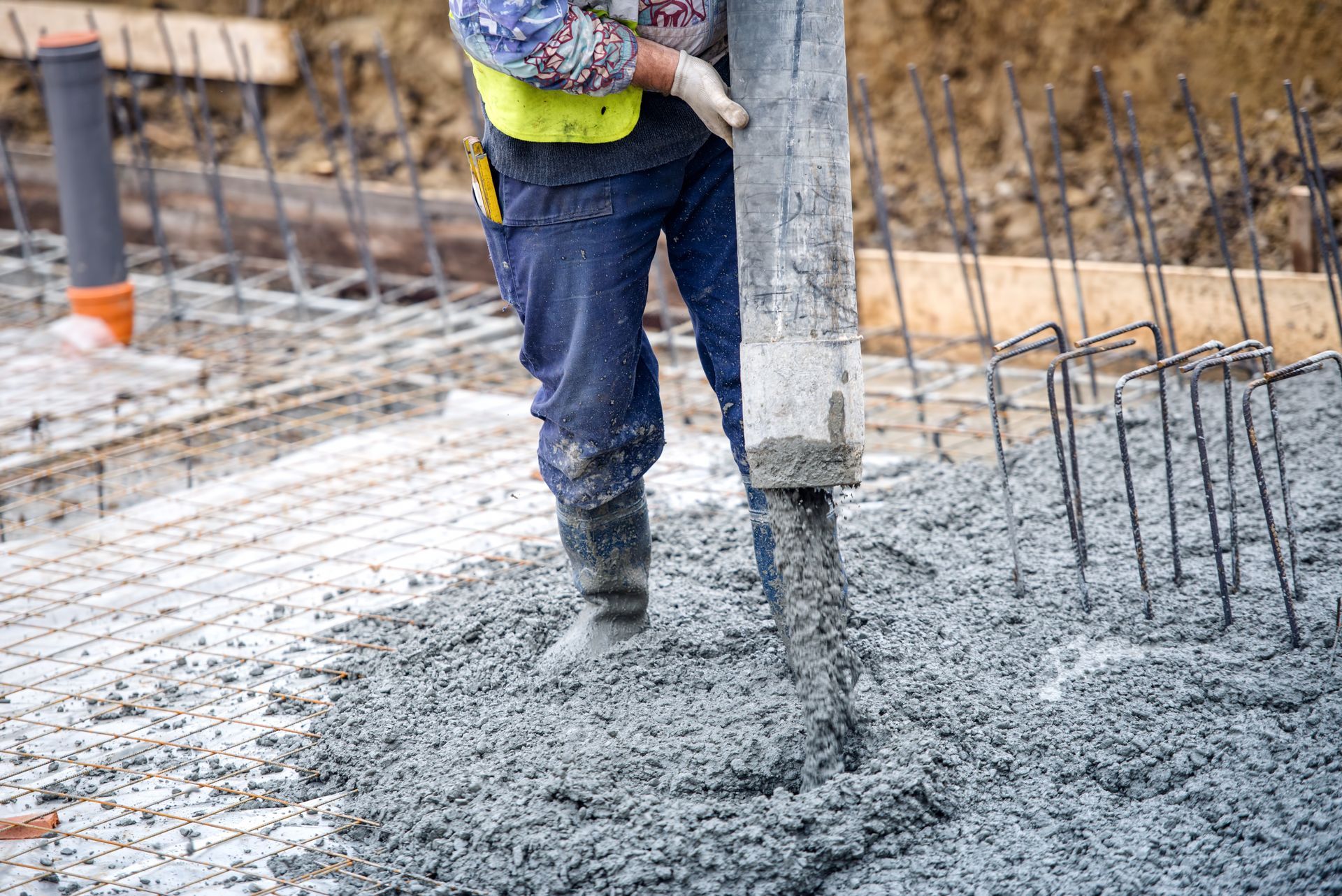
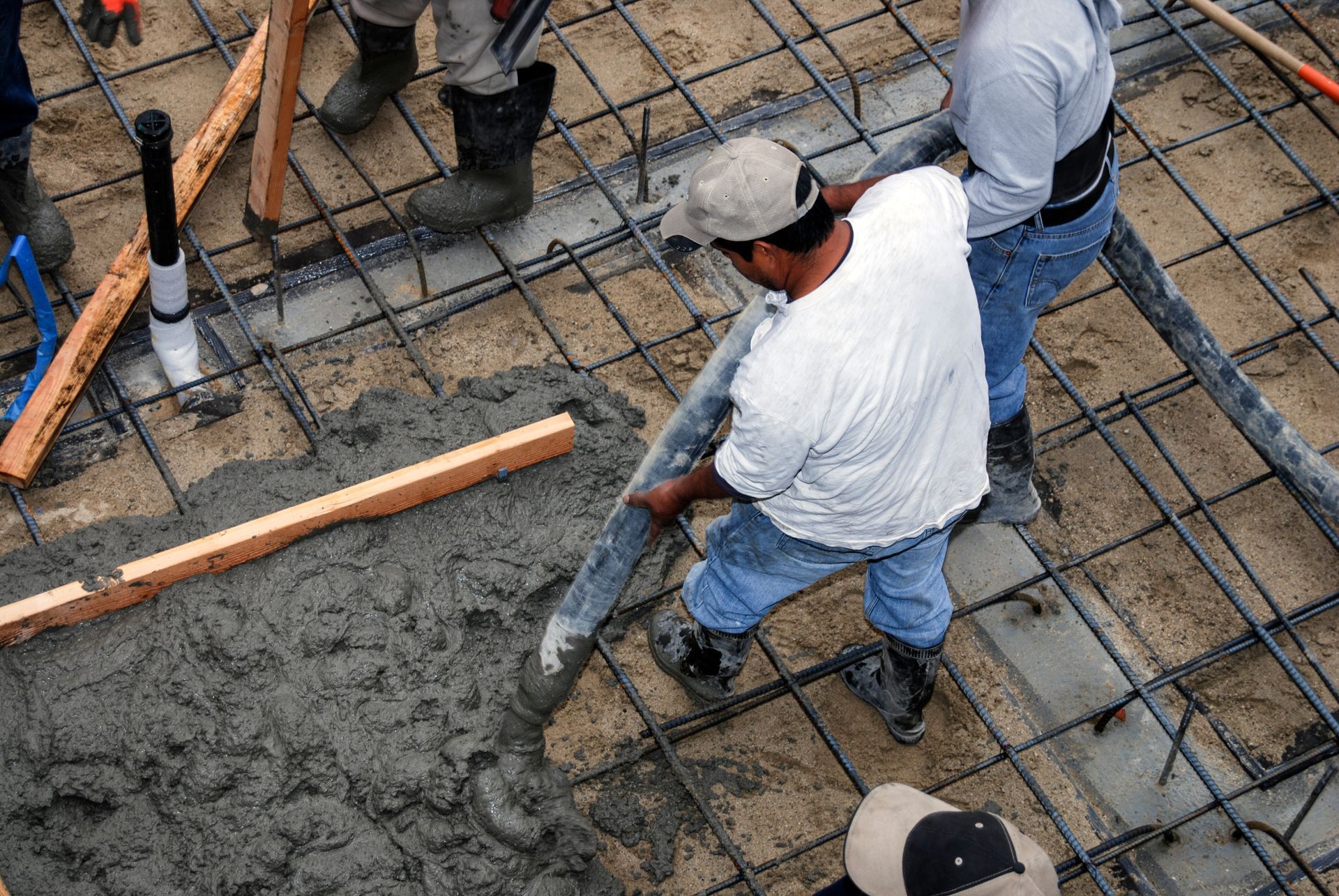
A line pump is mounted on a trailer or skid and uses flexible hoses laid along the ground to carry concrete to the pour point. Hose can be routed around corners, through doorways, or down narrow corridors, making line pumps a smart, cost-effective option for smaller pours and sites where maneuverability outweighs reach.
Line pumps work well for residential driveways and sidewalks, swimming pools and spa decks, ground-level foundation slabs and flatwork, interior slab pours with limited overhead clearance, and smaller commercial projects with lower concrete volumes.
In Acadiana, line pumps are common in neighborhoods like River Ranch and Couret Farms for driveways, patios, and ground-floor slabs. They also handle the frequent pool and outdoor living projects that Lafayette homeowners build due to the region's warm climate.
Key Differences Side by Side
Reach and Height: Boom pumps place concrete at significant heights and across long horizontal distances. Line pumps are limited by hose length and best for ground-level or low-elevation work.
Setup and Mobilization: Boom pumps require a larger truck with outriggers that need stabilized ground and clearance space. Line pumps are compact and fit into tighter job sites with limited staging room.
Volume and Speed: Boom pumps handle higher output volumes, suiting large commercial or infrastructure pours. Line pumps work efficiently for moderate volumes and shorter pours.
Site Access: If your Lafayette site has low overhead power lines, narrow streets in older neighborhoods like Freetown or Downtown Lafayette, or limited truck staging, a line pump may navigate those constraints better. Discussing these details with a concrete pumping services provider before scheduling can help you avoid costly delays.
Factors Specific to Lafayette Projects
Lafayette's subtropical humidity and high annual rainfall mean soil saturation can be unpredictable, especially near the Vermilion River. Soft ground may limit where a heavy boom truck can safely set up outriggers, making a line pump trailer a practical alternative on certain sites.
Commercial growth along I-10 and the Youngsville and Broussard corridors has driven demand for faster, high-volume pours on large footings and elevated structural elements, where boom pump capacity is often required. Meanwhile, steady residential construction and renovation in Acadiana neighborhoods generate consistent demand for line pump work on driveways, slabs, and outdoor amenity spaces.
Louisiana's building codes and local permit requirements can also affect scheduling and access logistics. Working with concrete pumping services providers who understand Lafayette, LA, regulations may help reduce delays.
How Do I Know Which Pump My Project Needs?
Describe your project scope to an experienced pumping professional. Key details include pour height, site dimensions, estimated concrete volume, and any access restrictions such as low overhead clearance or soft soil. A knowledgeable team can review those details and recommend the right equipment before mobilization day.
Can Both Pump Types Handle Residential Work?
Yes. Both boom and line pumps serve residential projects. The choice typically comes down to pour size and site access. Smaller flatwork and pool decks often suit a line pump, while large foundations or elevated home structures may benefit from boom pump capacity.
Schedule Your Lafayette Pour With Confidence
When you need reliable concrete pumping services serving Lafayette, LA, Teague Rental Equipment brings over 70 years of industry experience, ACPA certification, and a 10-pump Schwing fleet operated by a team with more than 150 years of combined expertise. Whether your job calls for a boom pump's long reach or a line pump's ground-level precision, its team can match the right equipment to your project.
Explore the fleet to see available pump models, or contact the team to request a free consultation and schedule your pour. Call (225) 355-6243 today to speak with an experienced operator who knows what it takes to get concrete placed right in the Acadiana area.